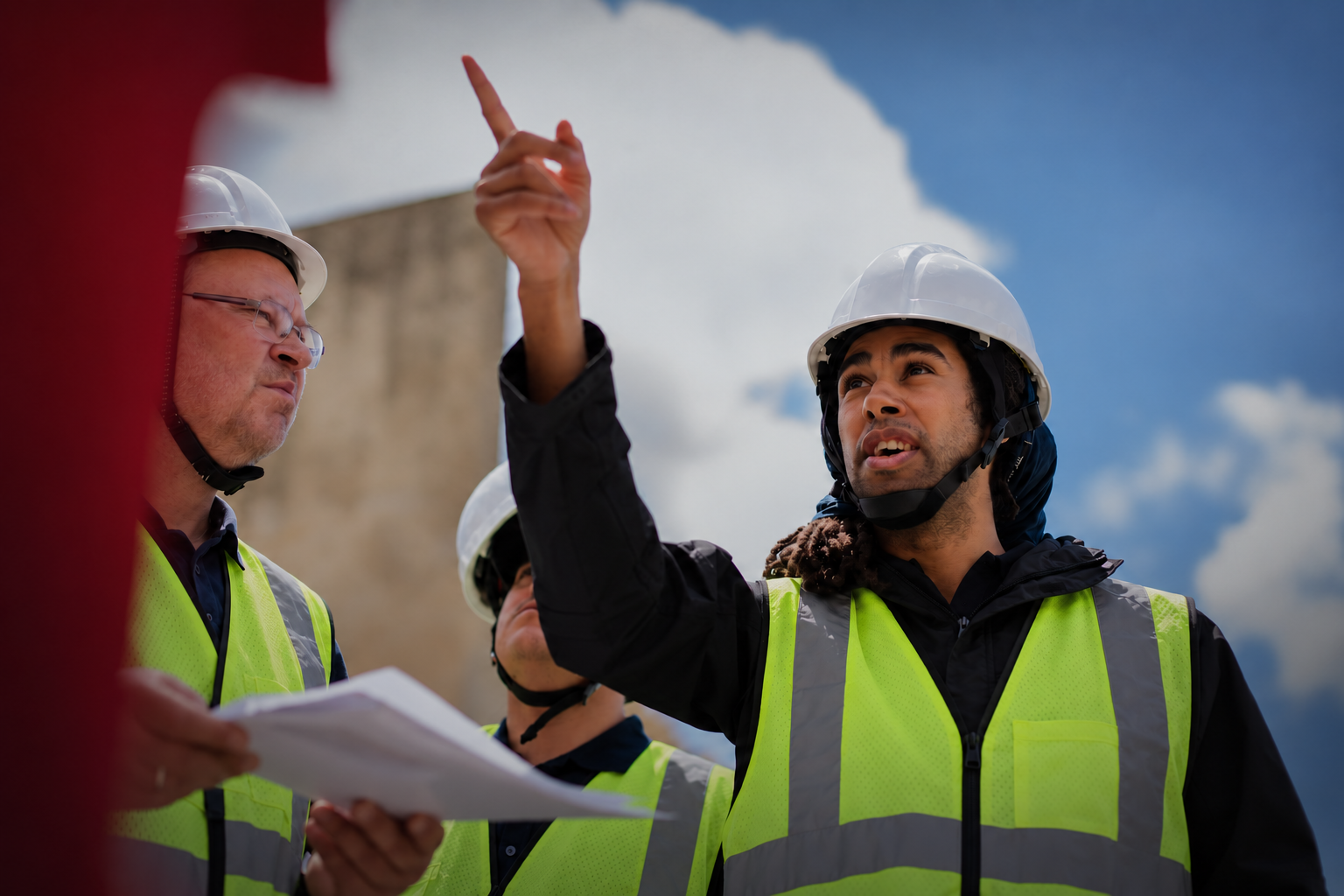
A Site Meeting Is for Decision-making, Not Searching for Information

A site meeting is not just a routine event marked in the calendar. It is one of the key forums in a construction project for management, coordination, and contractual relationship management between the client, main contractor, and designers. It covers project progress, the status of design work, open issues, and changes, and is used to agree on matters that affect project delivery.
A site meeting is not just a routine event marked in the calendar. It is one of the key forums in a construction project for management, coordination, and contractual relationship management between the client, main contractor, and designers. It covers project progress, the status of design work, open issues, and changes, and is used to agree on matters that affect project delivery.
In a well-prepared site meeting, all parties share a common understanding of the project's status, allowing the meeting to focus on what matters: discussing key issues and making decisions.
The challenge arises when background information is scattered across emails, previous meeting minutes, plans, schedules, messages, and different systems. As a result, some of the preparation time—and, at worst, the meeting itself—is spent determining what was previously agreed, what has changed, and where things currently stand.
Meetings represent a significant time investment in construction projects. In a study examining ten construction projects, meetings accounted for 13% of contractors’ engineers’ coordination time.¹ A Finnish dataset covering 17 site meetings also showed that resolving open design issues requires expertise from multiple parties.² The value of meetings should therefore be safeguarded through thorough preparation and systematic follow-up.
Site meetings are also a tool for managing contractual relationships
A site meeting and its minutes serve a purpose beyond practical management. When YSE 1998 has been incorporated into the construction contract, under Section 66, a remark or notification entered in the site meeting minutes that would otherwise have to be made in writing is deemed equivalent to a written notification.³
That is why it matters what is recorded in the meeting, what the various parties report, what is decided, who is responsible, and which matters need to be revisited. The minutes are not merely a checklist, but part of the project documentation and contractual record. However, the legal interpretation of each contract must always be assessed separately.
Careful preparation ensures the meeting delivers value
Information is brought to the site meeting from various sources. The main contractor reports on the progress of the construction site, the designers provide updates on the design status, and the client raises their outstanding questions and decisions that need to be made.
To ensure the meeting can be used to address these matters, the main contractor’s site management must have an up-to-date understanding of at least three things before the meeting.
First: Which items agreed upon or raised in previous site meetings are still outstanding? Has the agreed action been completed, has the necessary response been received, and can the matter be considered closed?
Second: What has changed in the project since the previous site meeting, and what needs to be raised for joint discussion? For example, a design change, a missing plan or approval, a deviation affecting the schedule, or another issue affecting site progress may require action from multiple parties.
Third: which matters require a decision, a position, or a next step in this meeting? When these are identified in advance, each matter can be brought to the meeting with sufficient background information and addressed by the appropriate parties.
Once the groundwork has been done, there is no need to start the meeting by asking, “Where was this discussed?” Instead, you can move straight on to deciding what to do about it.
Adicio reduces manual data compilation before site meetings
Professionally managed construction sites already prepare carefully for site meetings. Adicio’s role is not to teach site teams how to run meetings, but to reduce the manual effort involved in gathering information for preparation and help ensure that nothing essential gets lost among fragmented data.
Before a site meeting, the main contractor’s site management can, for example, determine which items from the previous meeting are still open, what has happened since then, which design- or approval-related matters are awaiting resolution, and which changes or deviations should be raised at the next meeting.
Adicio brings together site records, tasks, decisions, and essential project materials, helping you find the information you need without having to manually compile the context from different sources each time.
In the meeting itself, expertise, discussion, and decision-making remain the responsibility of site management and the other participants. Site intelligence helps ensure that the right matters are addressed and that the agreed information can also be found later when needed.
The meeting ends with decisions, but follow-up continues afterward
A good site meeting is neither as short nor as long as possible. It is well prepared, focused on decision-making, and clearly documented.
When open issues, changes, and questions requiring a decision are visible before the meeting, the discussion can begin with “what should we do about it?” rather than “where can we find the information?”
Work continues after the meeting. Decisions and agreed actions must be integrated into the work on site, and their progress must be monitored until the next meeting. This ensures that the site meeting is not an isolated event, but an integral part of the project's ongoing management.
Want to see how Adicio helps you prepare for your next site meeting? Book a demo and see it in action.
Sources and notes
¹ Chang, A. S. & Shen, F.-Y. (2009). Coordination Needs and Supply of Construction Projects. Engineering Management Journal, 21(4), 44–57. doi:10.1080/10429247.2009.11431844.
² Mäki, T. & Kerosuo, H. (2020). Design-related questions in the construction phase: The effect of using the Last Planner System in design management. Canadian Journal of Civil Engineering, 47(2), 132–139. doi:10.1139/cjce-2018-0382.
³ General Conditions for Building Contracts YSE 1998, Section 66. This article does not constitute legal advice.
